Seven Posters in a Pyongyang Hotel
The seven photographs presented below are shots of posters that adorned the corridors of the Yanggakdo Hotel in Pyongyang. They feature architectural objects of the DPRK capital built under housing programmes of recent years. Each poster includes a short information note about the district or building. These images are not artistic photography but documentation of visual materials available in the hotel, with translations of accompanying texts. The materials are collected as a visual diary, recording how the city presents itself through stands and posters in public spaces.
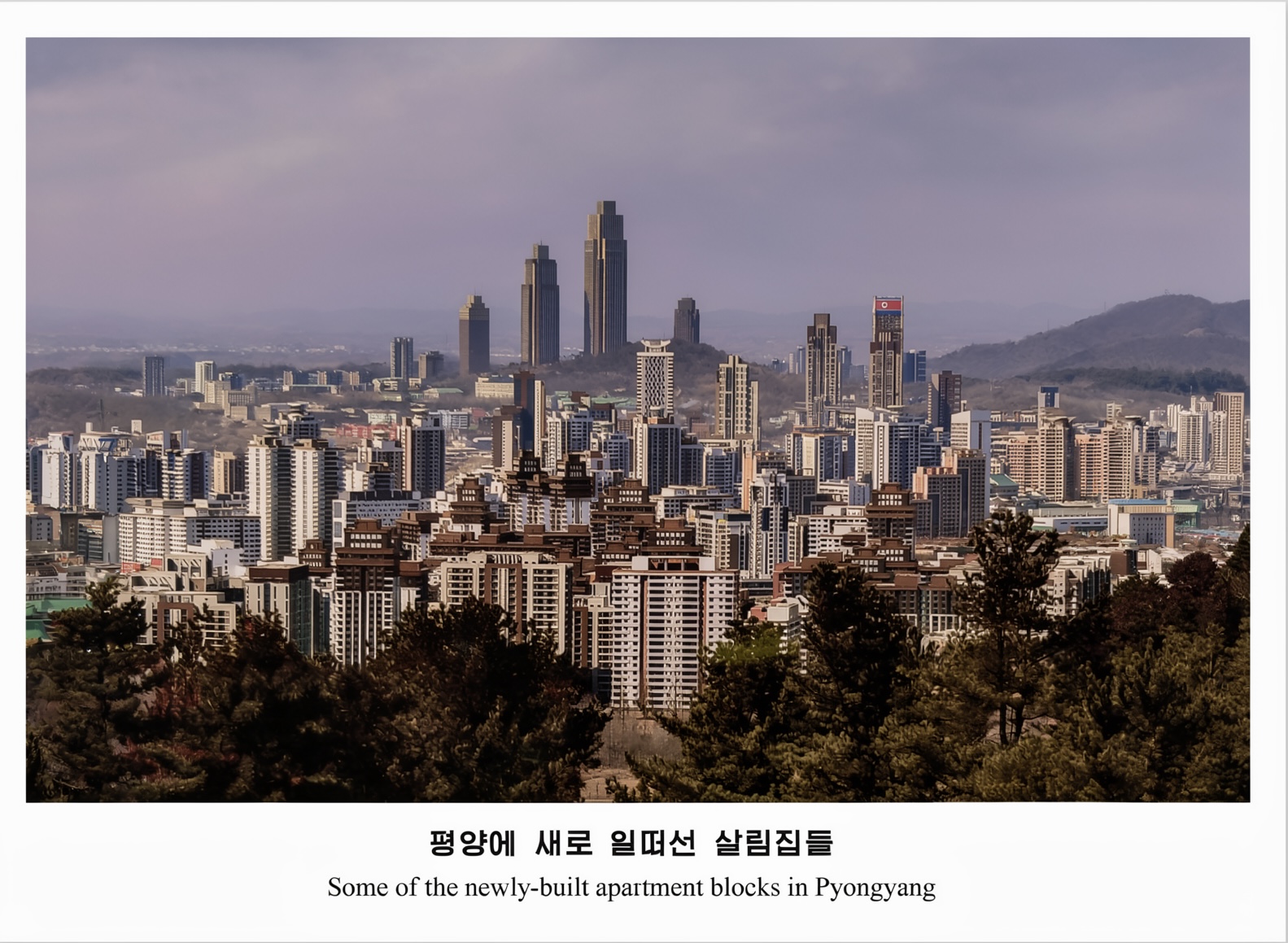
The inscription says these are "newly built residential quarters". This indicates that active construction is underway in the city.
Terrace residential sector on the bank of the Potong River (Potonggang) is located in the central part of Pyongyang, in the administrative quarter of Kyongru-dong, whose name translates as "beautiful pearl terrace".
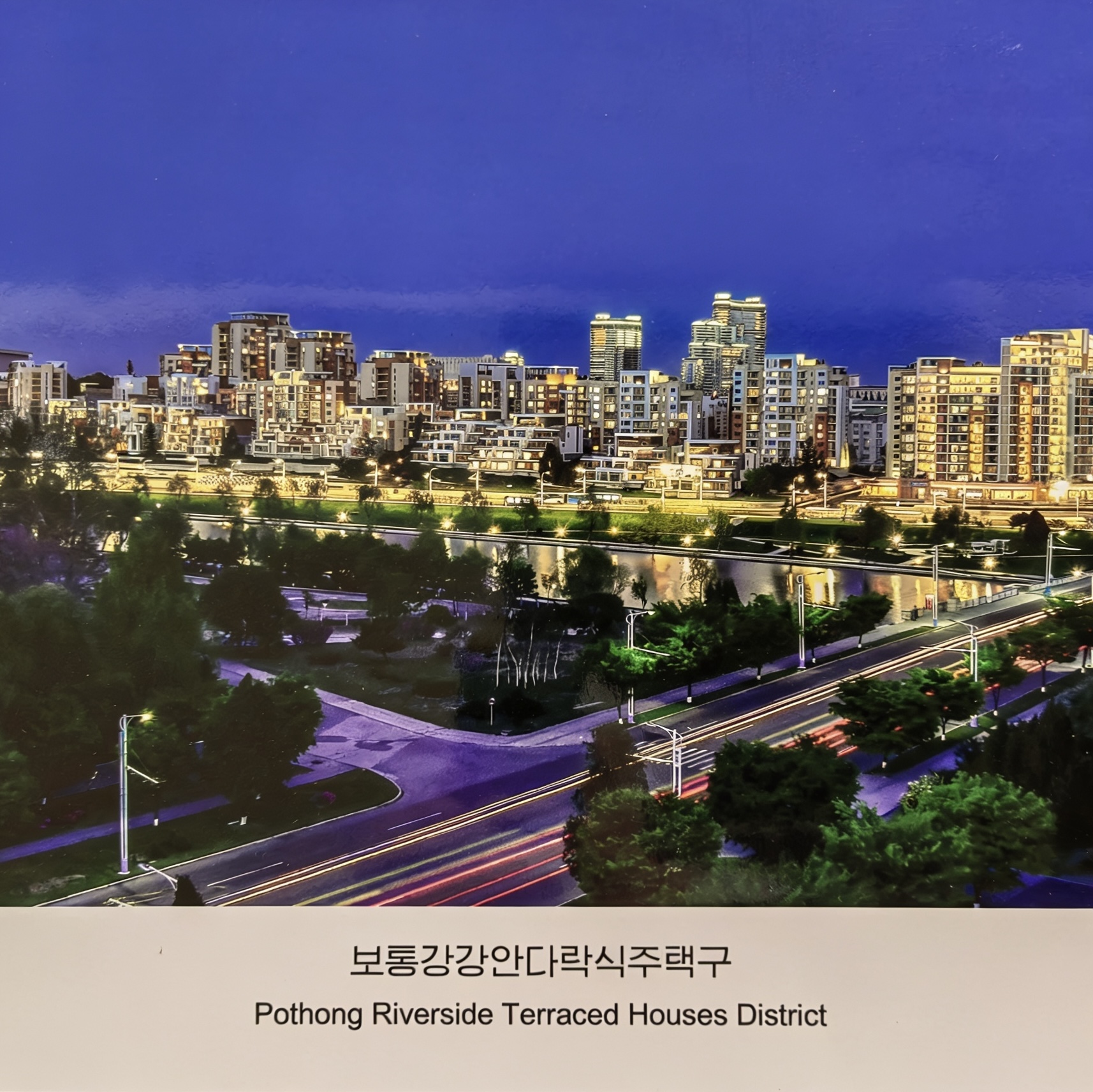
The construction initiative was put forward by Kim Jong Un in March 2021, and the construction itself was completed in just one year — in April 2022. The architectural feature of the complex is a harmonious combination of terraced, multi-storey and low-rise buildings that blend organically into the hilly riverbank, creating a stepped development effect.
Hwasong Street is a new residential area in the eastern part of Pyongyang, built under the programme of constructing 50,000 apartments.
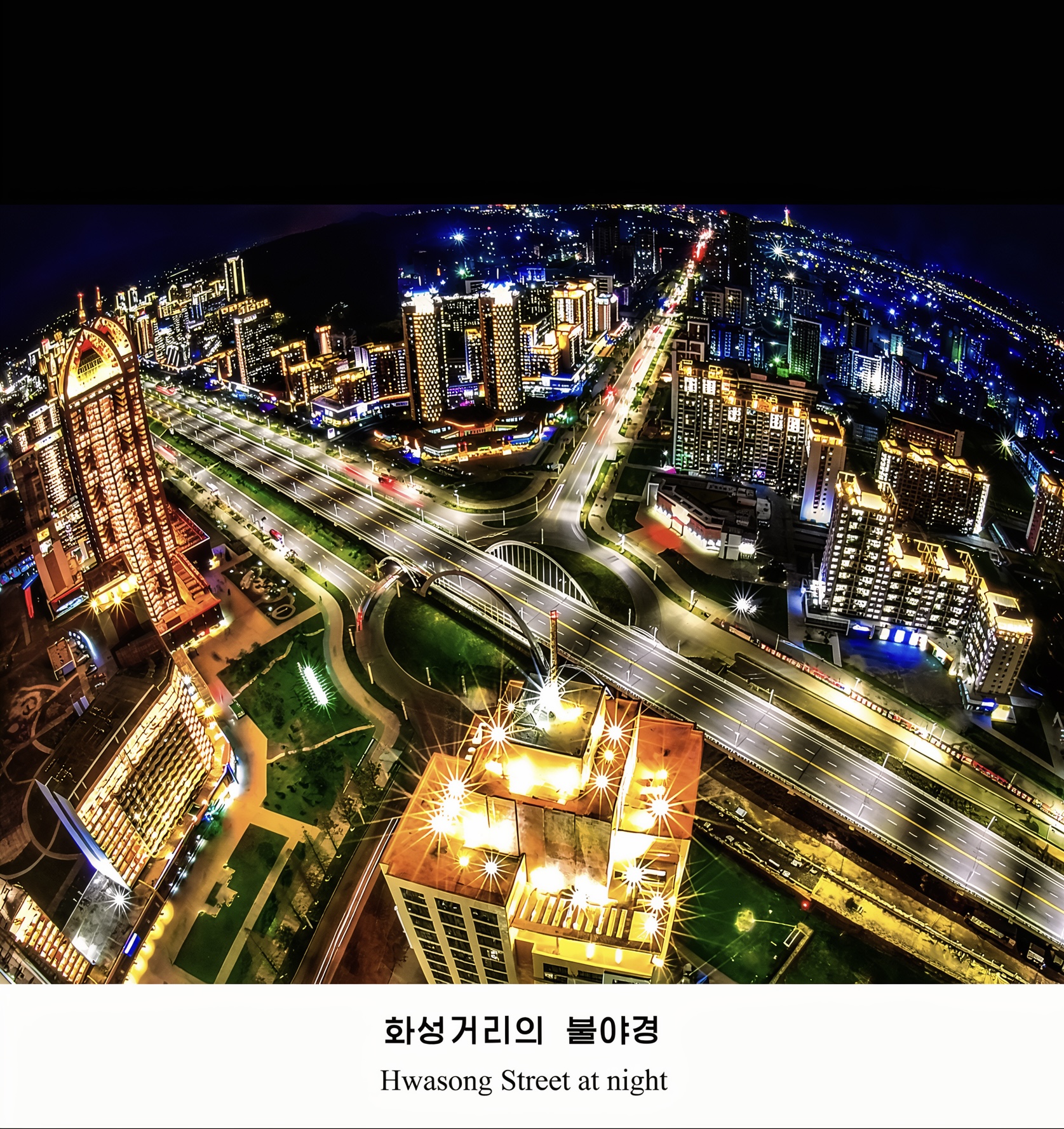
The area was built in stages: the first phase opened in April 2023, and by 2026 the fifth construction phase was underway. The architectural dominant of the street is the twin buildings of unusual shape that appear at each new stage. The residential buildings have different numbers of storeys and colour schemes — finishing materials in orange, brown and light grey tones are used. All necessary infrastructure — shops, cafes and consumer services — is placed right in the residential quarters.
"Floating" service centre: The main architectural highlight is a service building that hangs over the roadway at the height of the 17th floor. It connects two towers on both sides of the road, and a clock is mounted in the centre of the arch on which it rests. The length of this "sky bridge" is more than 90 metres.
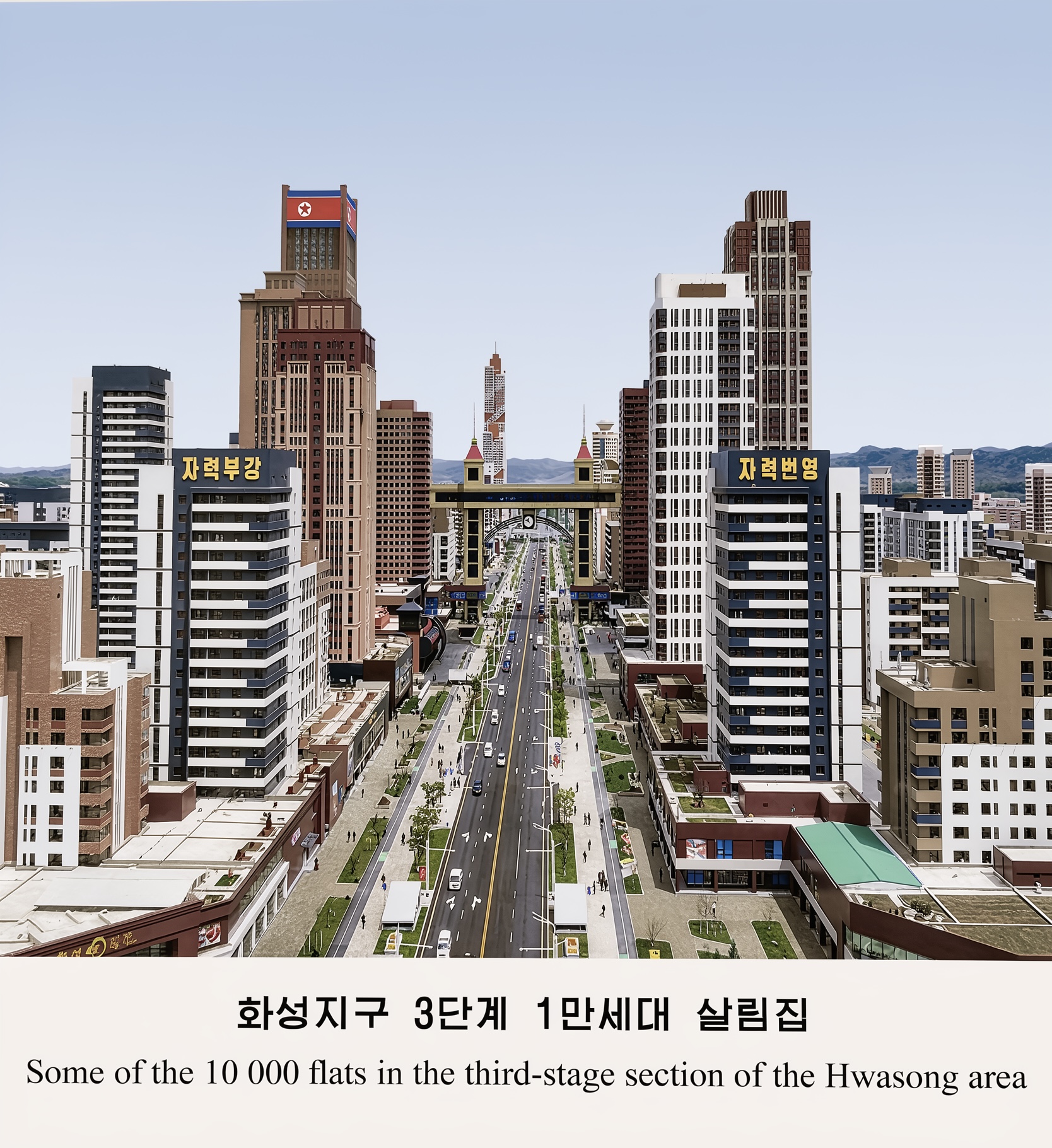
This is not just a residential area, but an experimental project with a skyscraper bridge and a thoughtful colour scheme of the houses — by design, it was to be a model "city within a city".
Hwasong Street in North Korea was built in record time — just one year (from 2021 to 2022), and its opening symbolised Pyongyang's new housing programme.
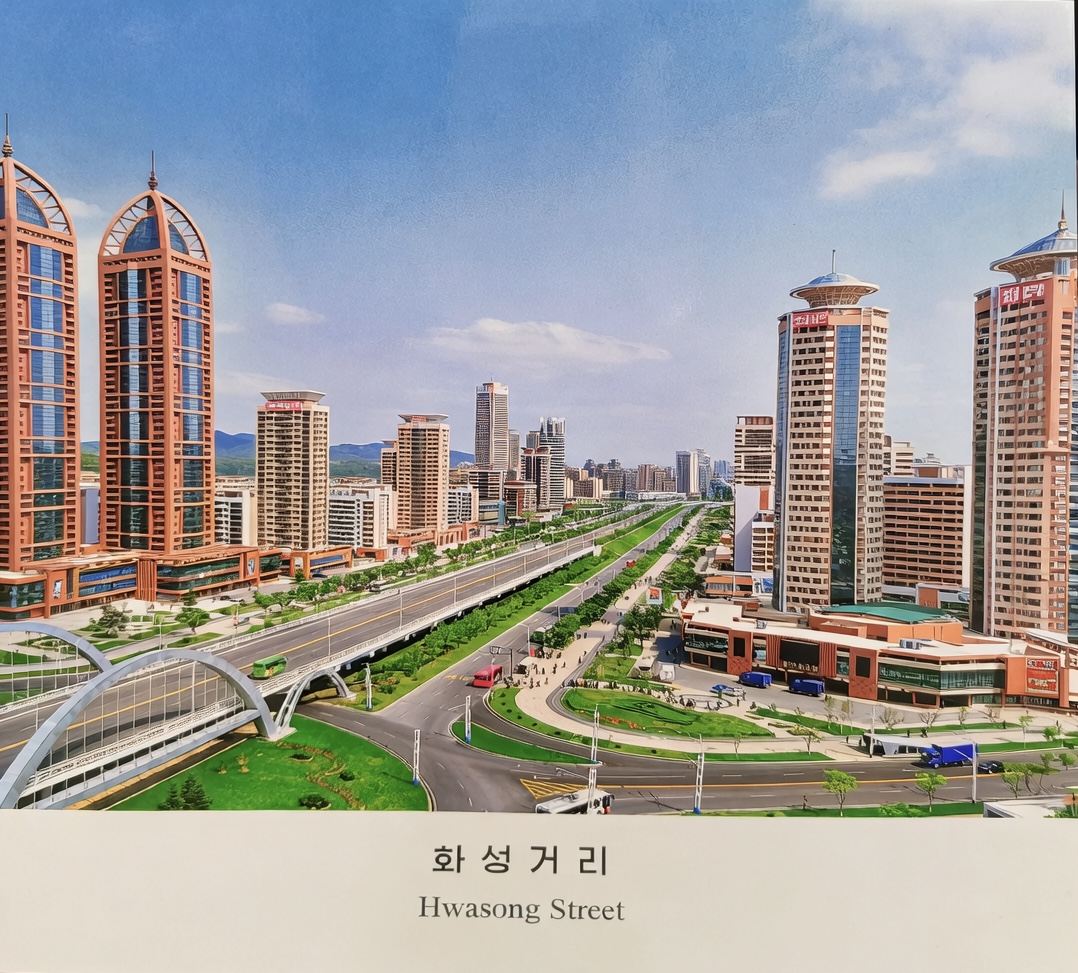
The architectural appearance of the district is characterised by pronounced symmetry and unique towers with glazed tops in the shape of "crowns" or "umbrellas", specially designed to create a recognisable skyline of the capital.
New housing standard: Rimhung Street was opened in 2023 and became one of the largest residential projects in the DPRK in recent years. This area was built up with multi-storey complexes to become a model of modern urban improvement for the capital, with an emphasis on landscaping and wide pedestrian zones.
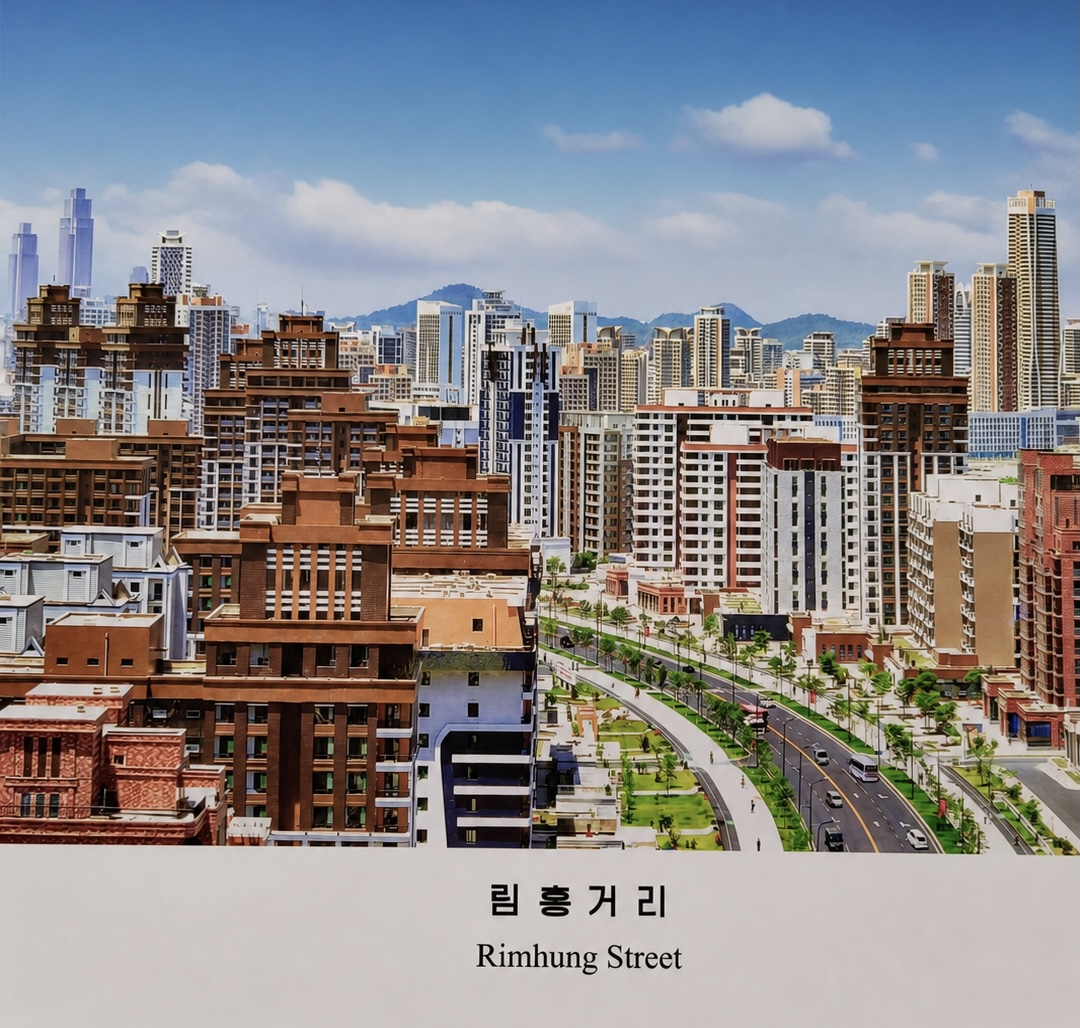
This residential area was built on the site of old and less well-maintained buildings. According to official data, it was a "gift" to the residents of Pyongyang, and the opening of the street was accompanied by loud celebrations, emphasising the authorities' desire to modernise urban infrastructure in the central part of the city.
The main architectural dominant of this district is the huge red-brown multifunctional tower (right centre). It is designed in a style reminiscent of art deco and is one of the tallest residential buildings in this part of Pyongyang, acting as a visual anchor for the entire neighbourhood.
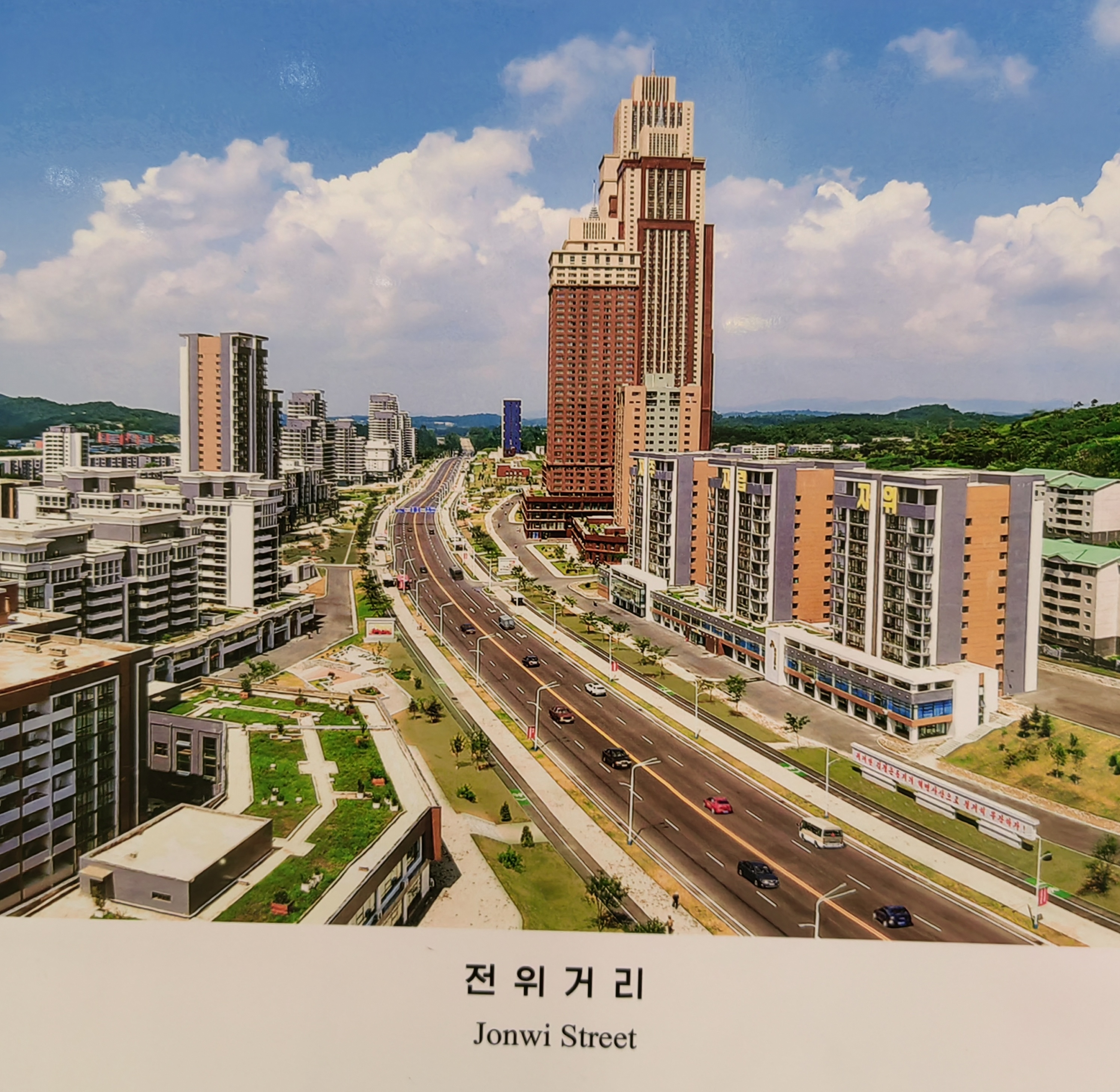
Chonwi Street was built as part of a large-scale state programme to provide modern, well-maintained housing. A well-landscaped area with pedestrian alleys and wide roads was deliberately created here, which is typical of "exemplary" urban projects in the DPRK in recent years.
The images convey the information that the North Korean side considered important to show to visitors: construction dates, architectural features, key infrastructure objects. All images are collected in one repository and can be used as reference material on modern residential development in Pyongyang.

No comments:
Post a Comment