🧥 "We'll Try to Keep It Down": Deconstructing a Friends Episode Through Language and Life
☕ A sudden injection of mortality interrupts the coffee-scented bubble of New York’s favourite friend group. The death of a downstairs neighbour—the bitter, bird-less Mr. Heckles—does not merely serve as a plot device. It becomes a cracked mirror, forcing Monica, Rachel, Ross, and Chandler to stare directly at their own unexamined lives. This lesson, drawn from the Friends episode “The One Where Heckles Dies”, offers a surprisingly rich framework for language learners and pop-culture analysts alike. The material transforms a 22-minute sitcom into a philosophical playground, complete with shadow selves, epistemological duels, and tacky inherited lamps.
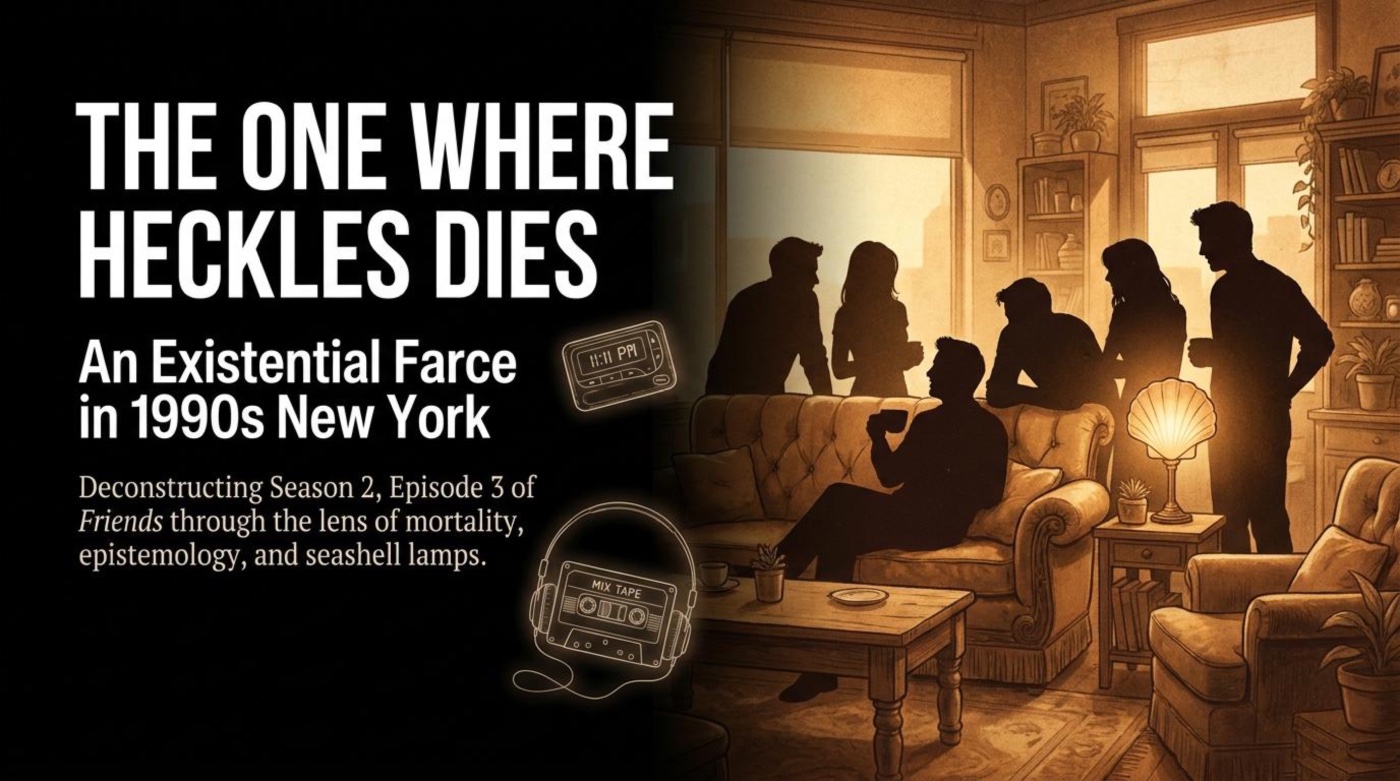
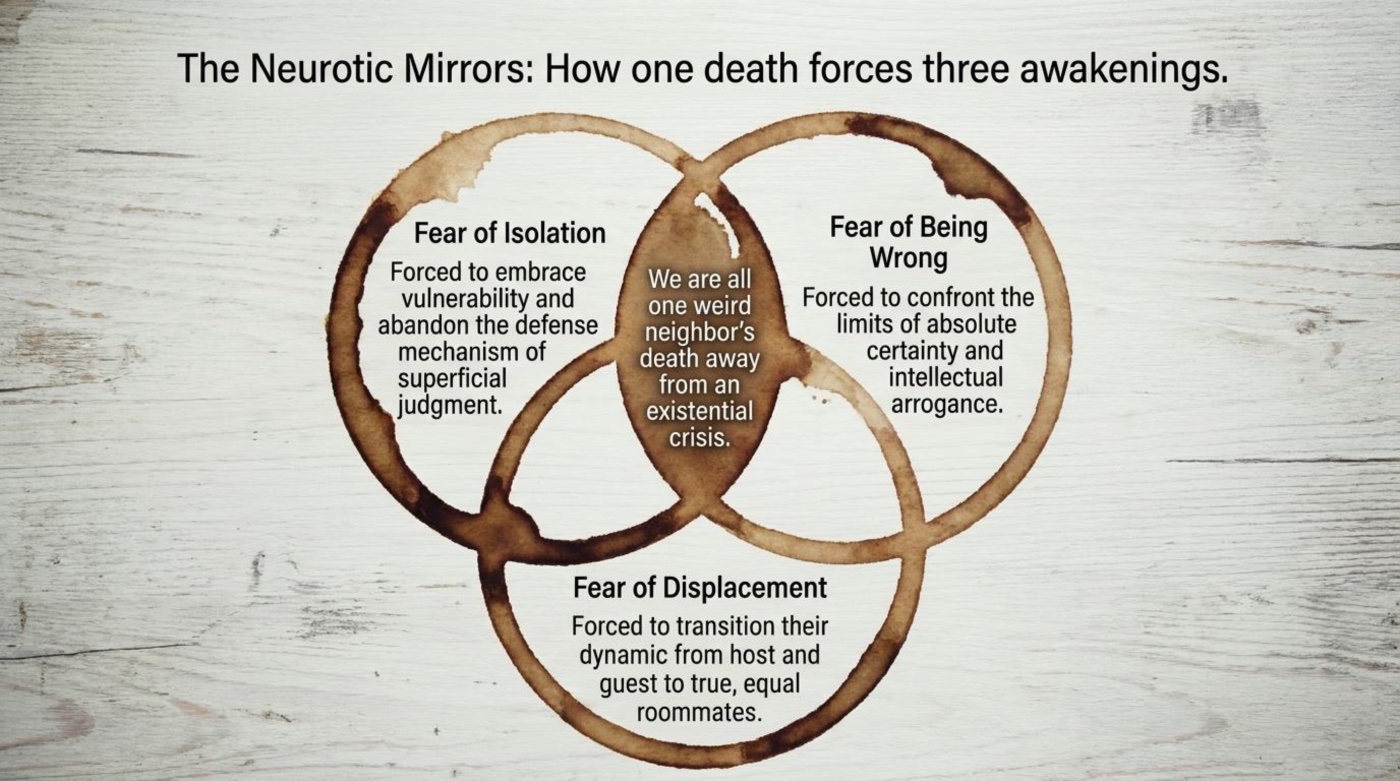
It is important to understand that the episode’s surface humour masks a deeper interrogation of loneliness and legacy. The key point is that each character’s reaction to Heckles’ death reveals their core fear: isolation, intellectual fragility, or loss of personal territory. Pay attention to how the writers use farce to explore these anxieties without losing the show’s signature warmth.
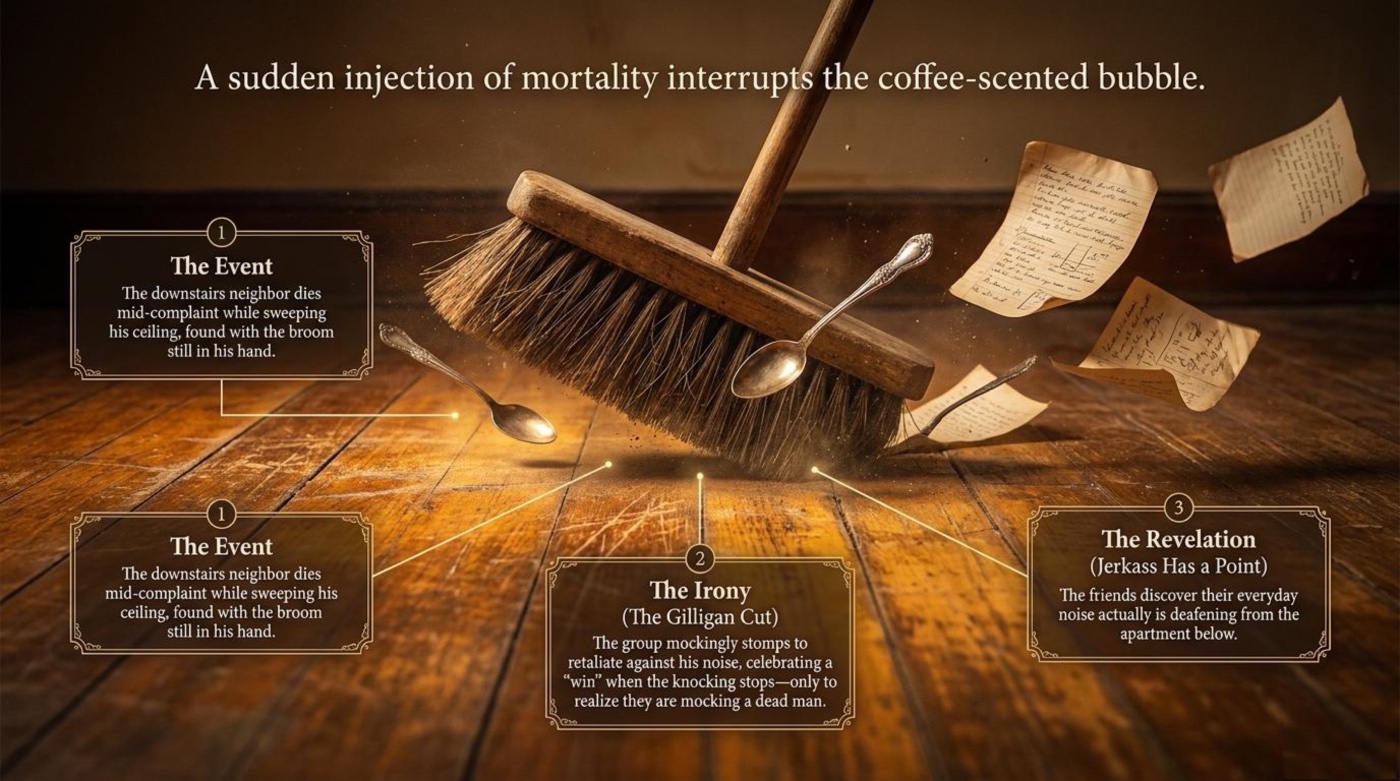
⚡ Section 1 · Content and Context — Three Crises, One Broomstick
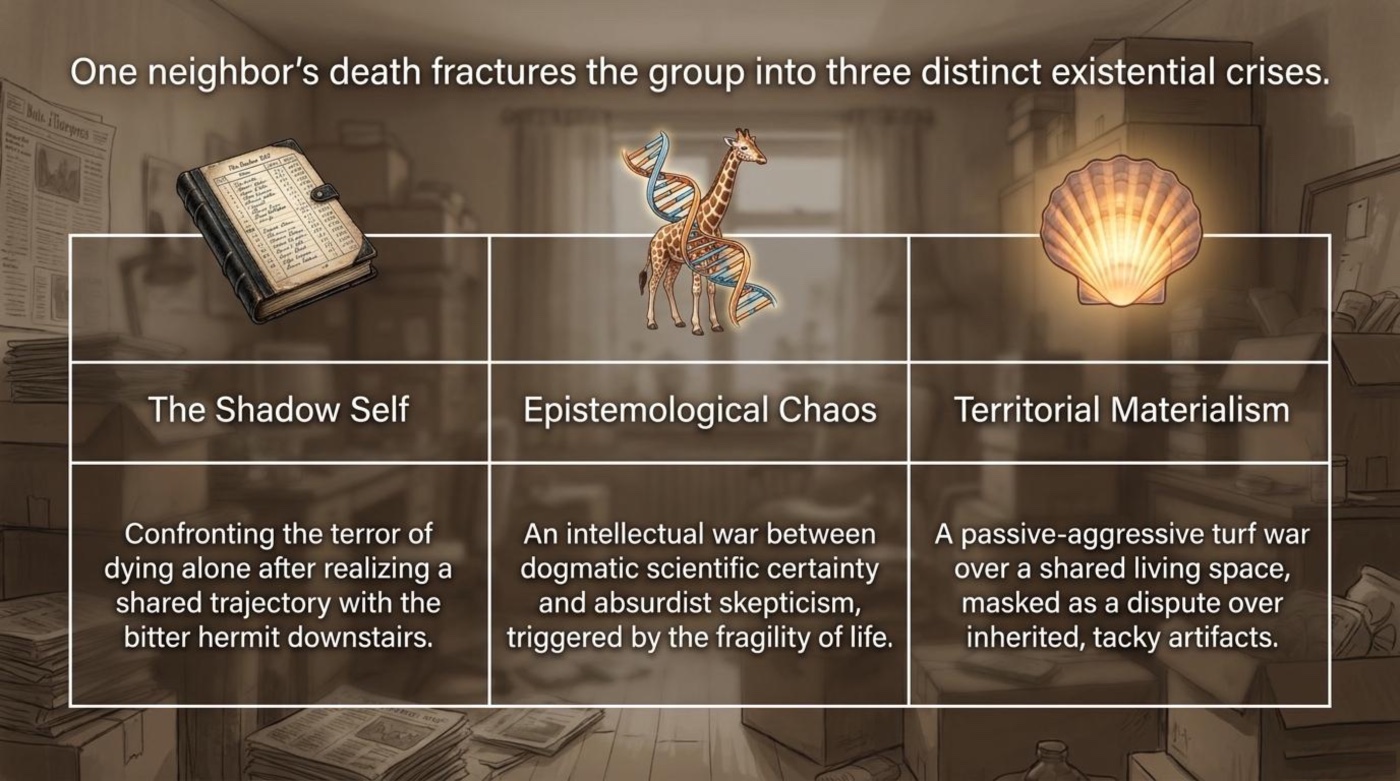
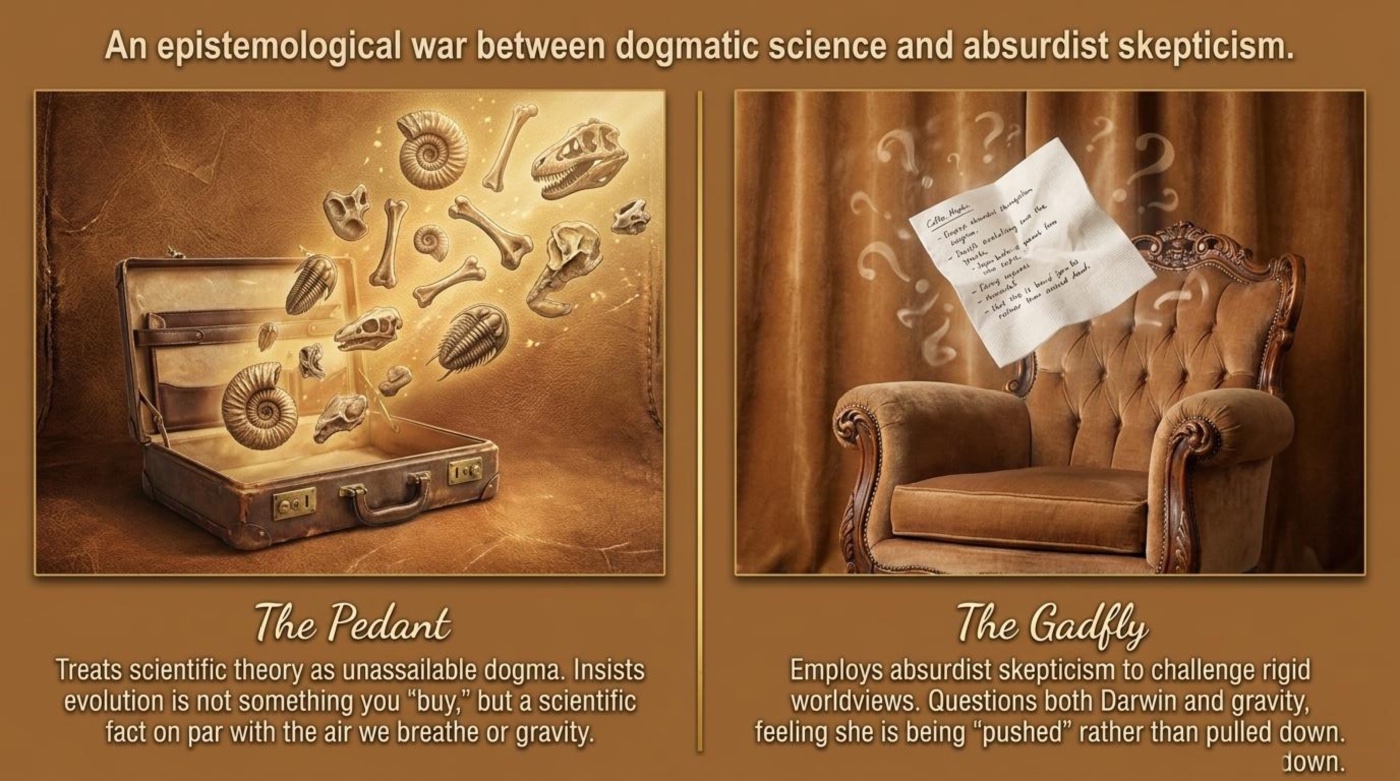
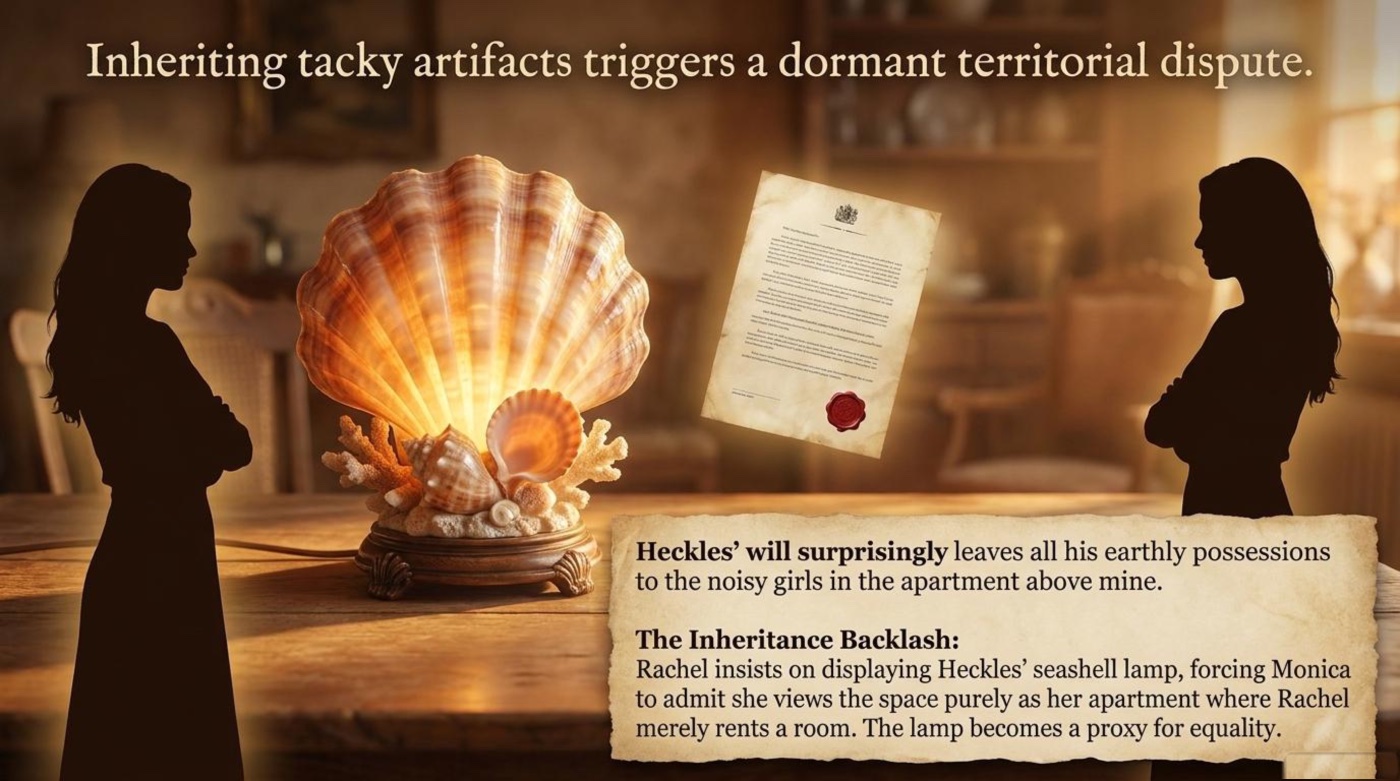
The episode fractures the group into three distinct existential crises, each mapped onto a character’s psychological battlefield. The Shadow Self haunts Chandler, who sees in Heckles a 30-year projection of his own lonely future. Epistemological Chaos erupts between Ross and Phoebe, turning evolution into a duel between dogmatic science and absurdist skepticism. Meanwhile, Territorial Materialism transforms Monica and Rachel’s apartment into a passive-aggressive warzone over a hideous seashell lamp.
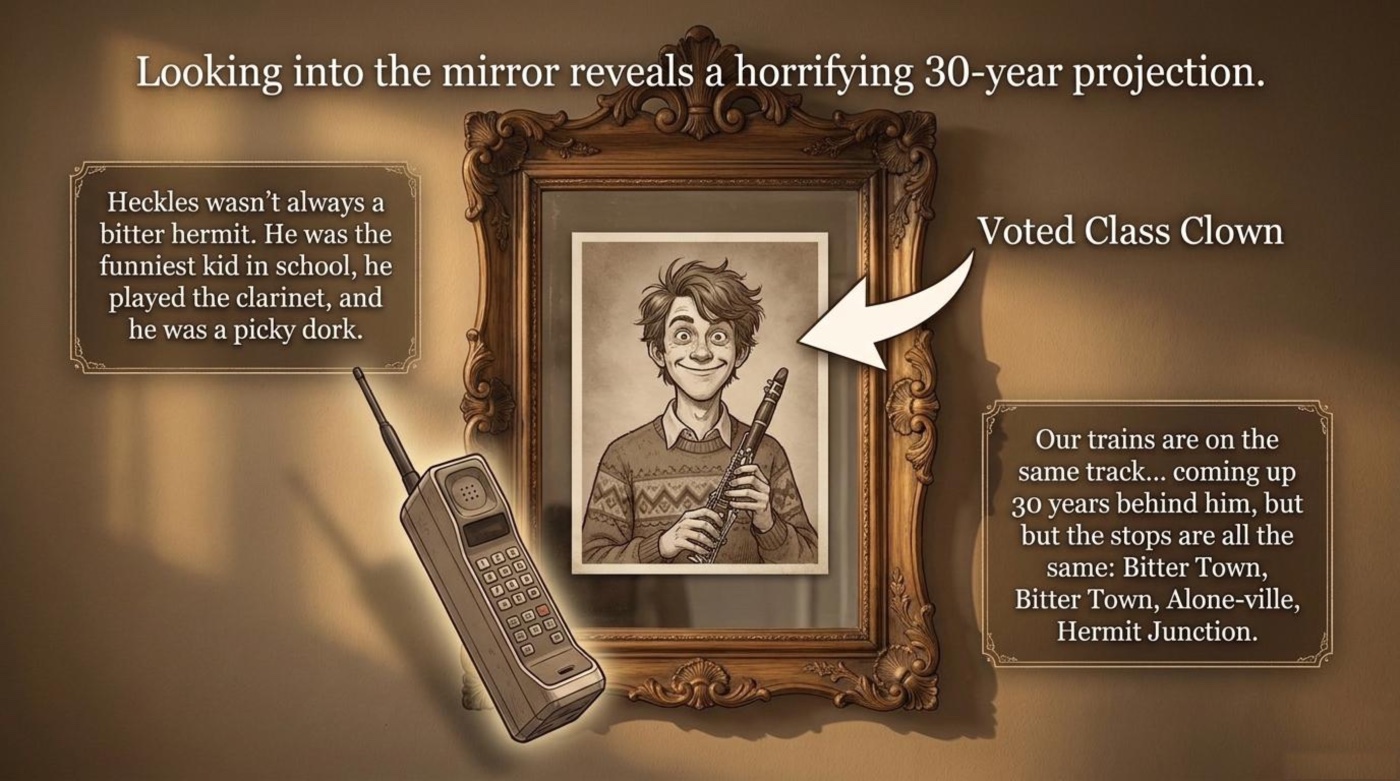
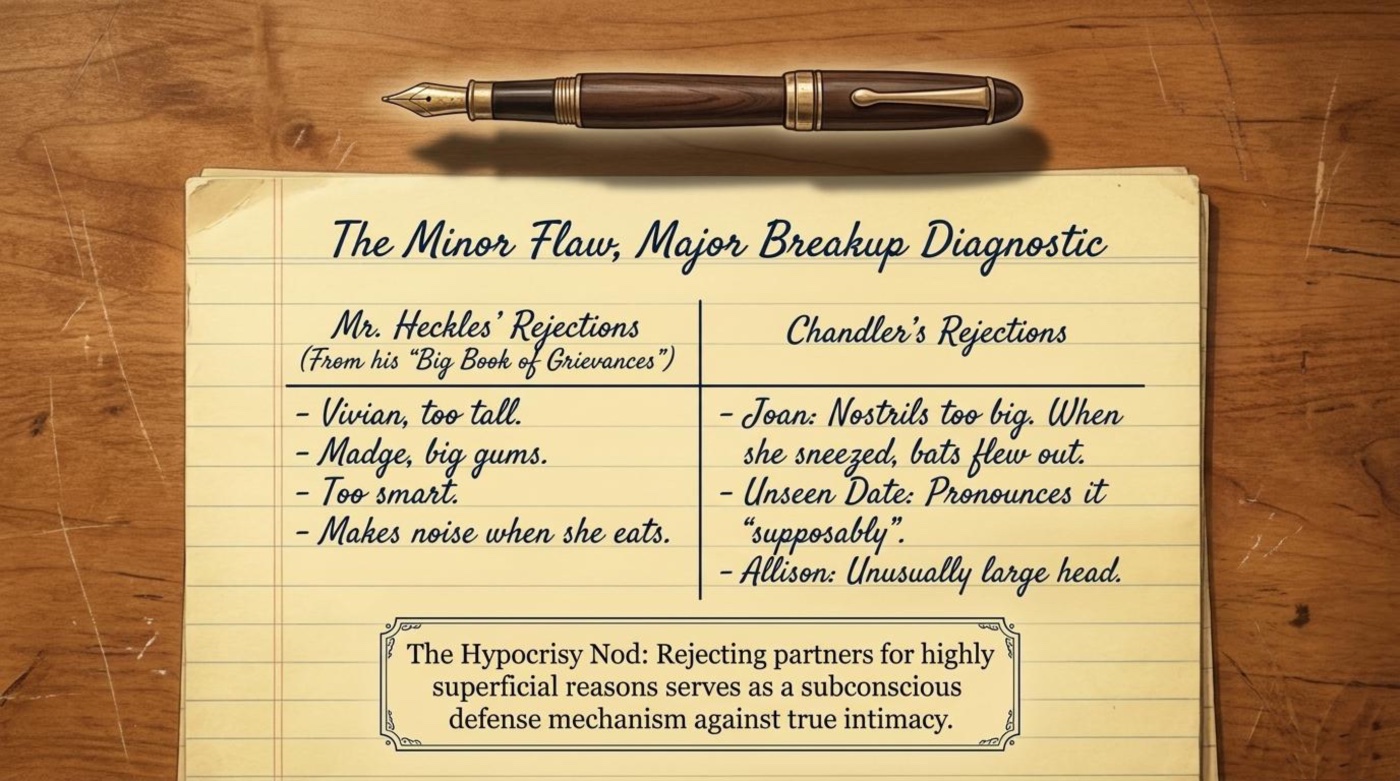
Chandler’s mirror moment is particularly potent. He realises that his own list of petty rejections—too tall, big gums, loud eating—mirrors Heckles’ “Big Book of Grievances.” The slide quotes Chandler’s chilling recognition: “Our trains are on the same track… coming up 30 years behind him, but the stops are all the same: Bitter Town, Alone-ville, Hermit Junction.” This is not mere comedy; it is a warning.
👤 Student (Anatoliy): “He compared his life, Chandler, and he felt like, uh, his life would be similar to Heckles' life. He was sorry about it.”
👩🏫 Teacher (Katarina): “He uses sarcasm as a shield, but underneath, he is terrified of ending up like Heckles.”
A real-life example from the lesson occurs when the student, Anatoliy, recounts his own success with a blog post, only to pivot back to the episode’s gravity. The practical advice for the reader is to examine your own “rejection list” and ask whether it protects you from intimacy or simply postpones it.
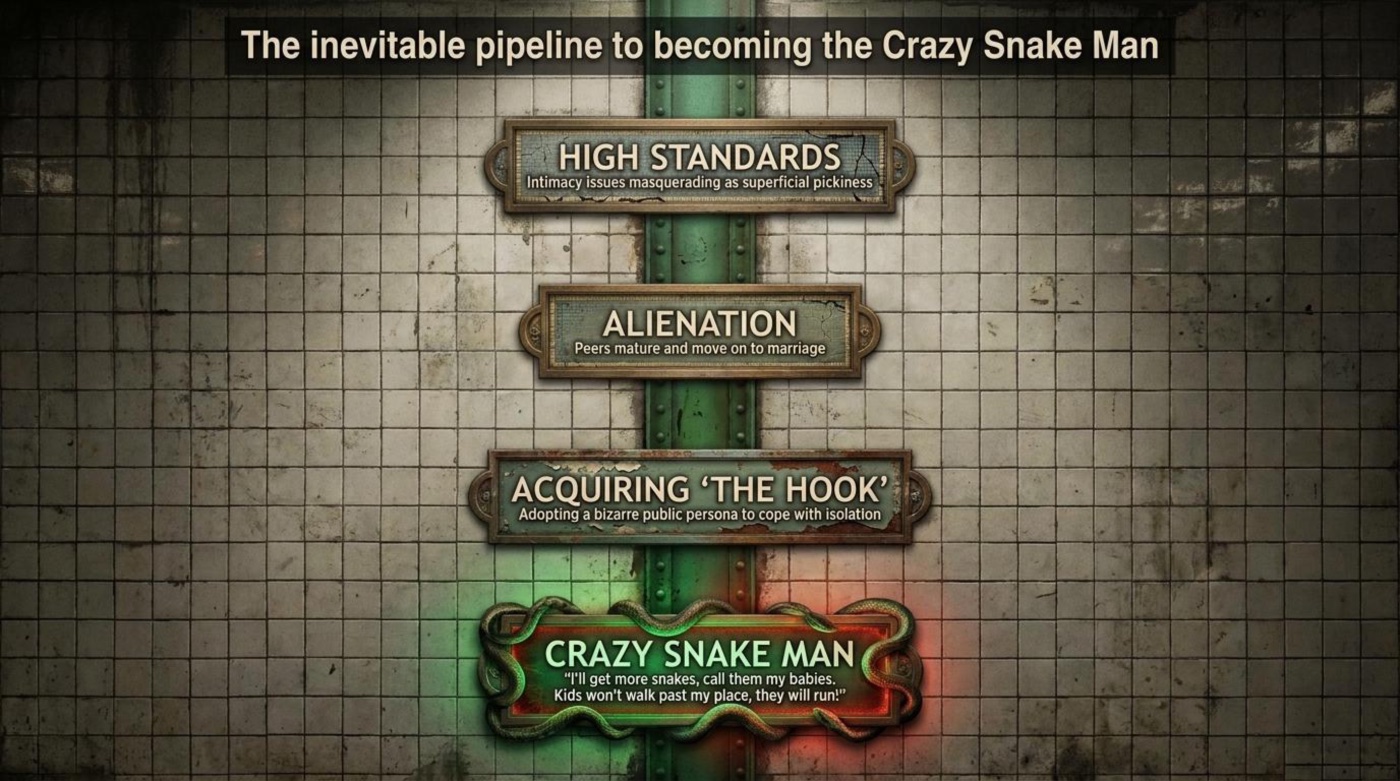
Interestingly, the slide on the “Crazy Snake Man” pipeline reinforces the idea that isolation is not inevitable but a series of small, avoidable choices. The lesson transcript highlights that Chandler’s call to Janice—his “ultimate safety net”—backfires when she appears pregnant and married.
👤 Student: “He invite her to meet again, and she came, but she was pregnant. She's already married… she can't miss the possibility to see face of Chandler.”
👩🏫 Teacher: “That's good. But this time she wins.”
The universe denies him the easy way out. This narrative beat underscores the slide’s thesis: one death forces three awakenings, and each character must choose whether to grow or stagnate.
📚 Section 2 · Vocabulary and Language Takeaways
The vocabulary slides provide rich, context-driven terms that anchor the episode’s themes. Below are the key items, presented with literal and figurative meanings, examples, and the slide’s own interpretation.
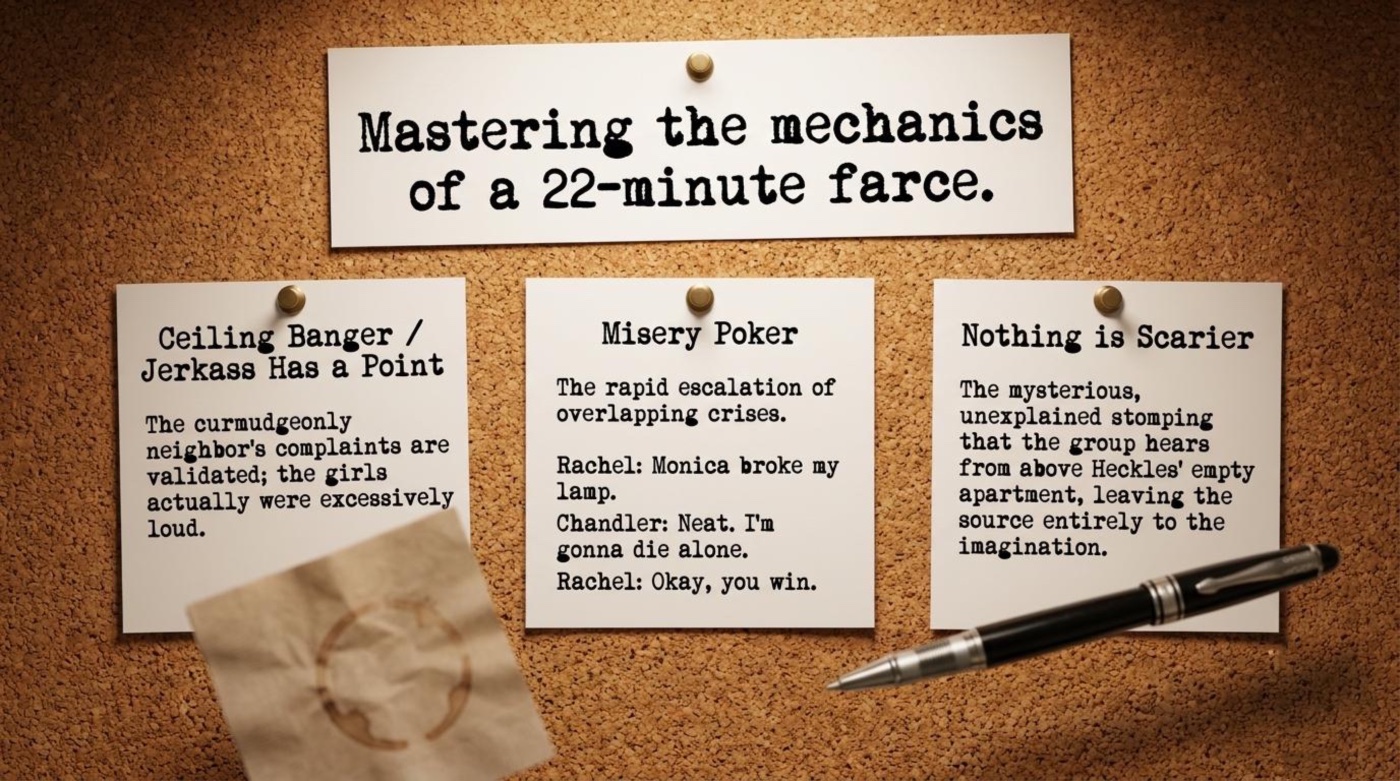
Slide explanation: The slide frames the episode as a “22-minute farce,” emphasising that the mechanical structure of sitcoms can contain profound philosophical questions.
Slide explanation: The slide describes an “intellectual war between dogmatic scientific certainty and absurdist skepticism,” triggered by the fragility of life.
Slide explanation: “Inheriting tacky artifacts triggers a dormant territorial dispute” — the objects become proxies for control and identity.
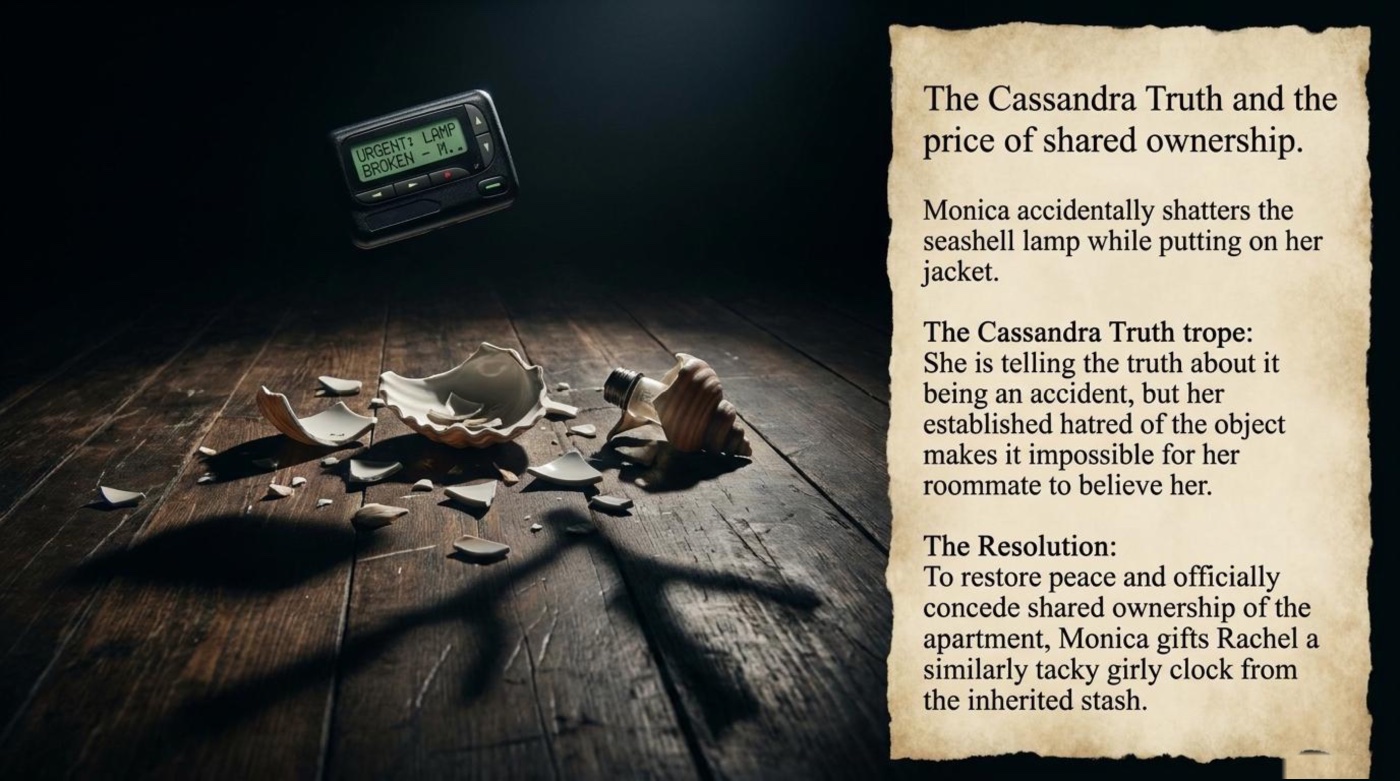
Slide explanation: “She is telling the truth about it being an accident, but her established hatred of the object makes it impossible for her roommate to believe her.”
🧠 Section 3 · Deeper Meaning — Metaphors and Symbols
1. The Broomstick (or Broom): The broomstick that Heckles uses to bang on the ceiling becomes a symbol of connection through irritation. It is the only physical communication between upstairs and downstairs. After his death, the broomstick lies silent, and the group realises that the noise was a form of life. The slide notes: “He held this broomstick” — a final act of engagement with the world above.
👤 Student: “They heard that he produced boom, boom, boom, boom from… broomstick.”
👩🏫 Teacher: “Americans would say broom. British would probably say broomstick. Difference in cultures, that's it.”
2. The Seashell Lamp: This tacky object represents inherited identity and unresolved conflict. It is ugly, impractical, and yet becomes a battleground for Monica and Rachel’s shared space. The slide’s interpretation: “Monica gives Rachel a similarly tacky girly clock from the inherited stash” — a truce that acknowledges that ownership is always negotiated.
👤 Student: “Monica accidentally shatters this… Cassandra Truth trope. She's telling the truth about it being an accident, but her established hatred of the object makes it impossible for her roommate to believe her.”
👩🏫 Teacher: “Argument, yes, about sharing apartments.”
3. The Mirror (Looking Glass): Chandler’s mirror moment—seeing Heckles as his future self—is the episode’s emotional core. The slide states: “Looking into the mirror reveals a horrifying 30-year projection.” It is a symbol of self-confrontation, forcing Chandler to recognise that his defence mechanisms are not personality quirks but escape routes. The transcript reveals that the student understood this as “a warning about the path of least resistance.”
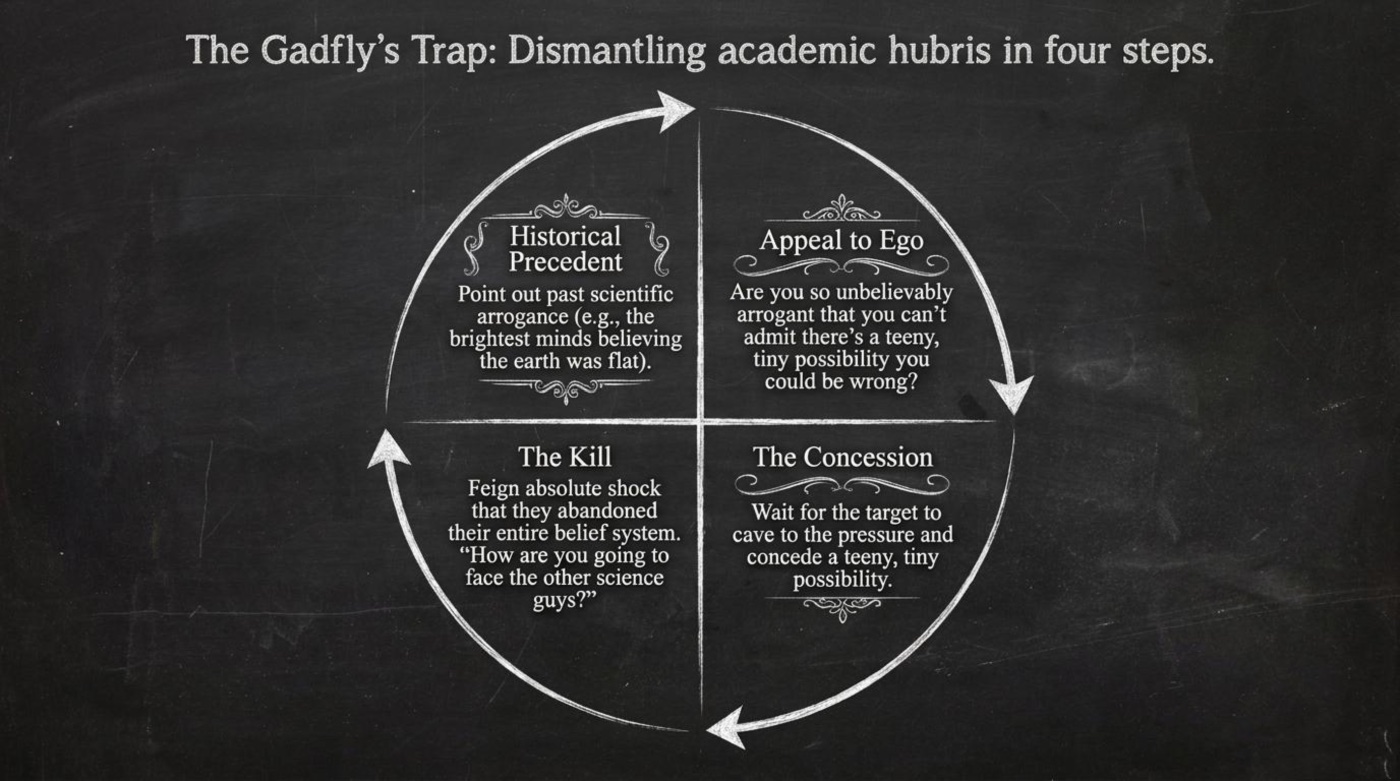
4. The Gadfly’s Trap: Phoebe’s absurdist questioning of evolution is not mere contrarianism. It is a Socratic trap designed to expose Ross’s arrogance. The slide outlines “Dismantling academic hubris in four steps.” This symbolises the necessity of humility in the face of uncertainty—a lesson that extends beyond science into daily life.
👤 Student: “Ross… mentioned evolution in front of Phoebe, and Phoebe answered something that she doesn't belief. And after that he started pursuing her in this.”
👩🏫 Teacher: “Phoebe does not deny evolution; she denies the right to absolute certainty. That is a profound philosophical position.”
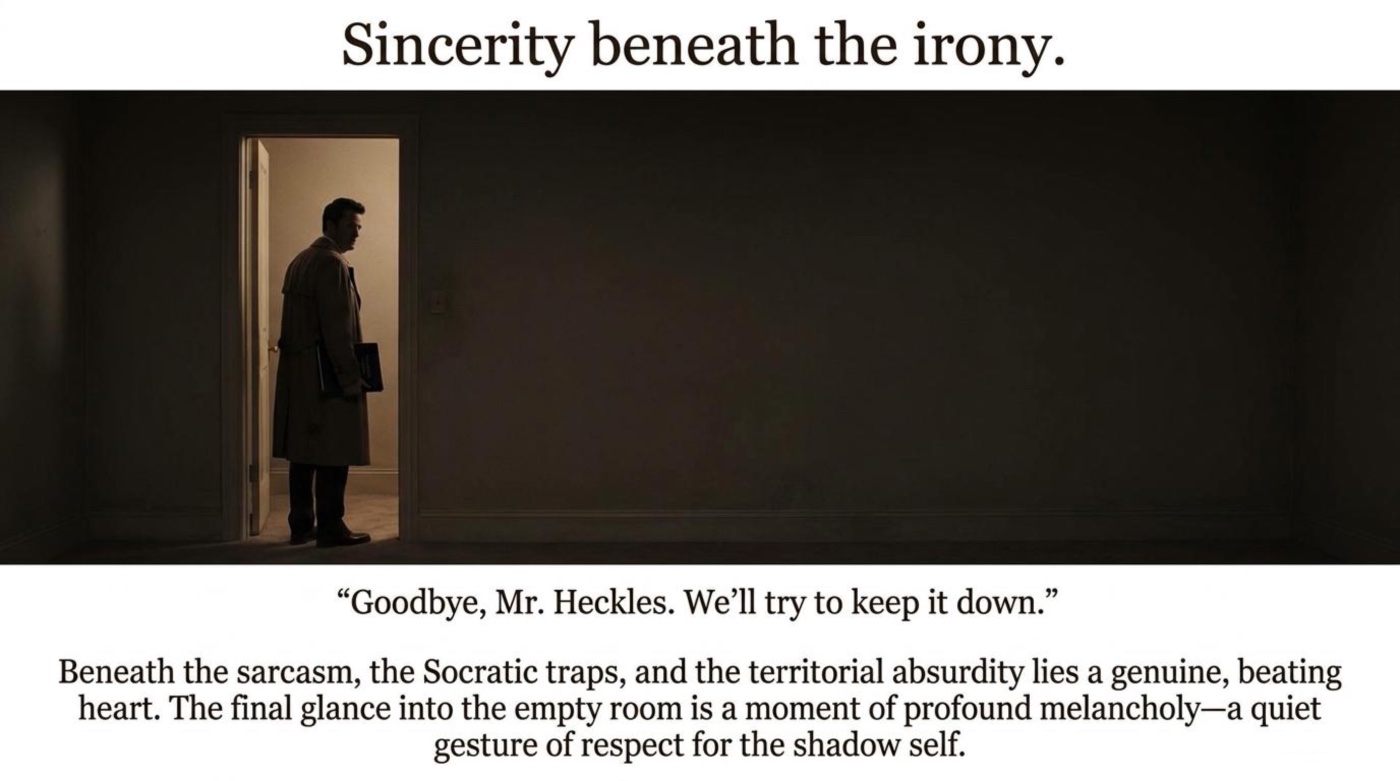
🕊️ Conclusion · Goodbye, Mr. Heckles — We’ll Try to Keep It Down
That final line, spoken by Chandler, is the episode’s emotional release. Beneath the sarcasm, the Socratic traps, and the territorial absurdity lies a genuine, beating heart.
👤 Student: “We will try to keep it down… Actually, it is a good gesture, because anyway, it is about death and all people need be respectful toward this.”
👩🏫 Teacher: “Kinda a sad episode, but a good one.”
The main takeaway for language learners is that even the most trivial pop-culture artefact can be a mirror for profound human fears—and that vocabulary, context, and metaphor are the tools we use to articulate those fears. Remember that every rejection list, every tacky lamp, every epistemological debate is an opportunity to practice not just English, but emotional intelligence.
📝 Call to action: Review the original episode with these themes in mind. Practice describing each character’s crisis using the vocabulary from this lesson. Apply the Cassandra Truth trope to your own life—when have you been disbelieved despite telling the truth? Share your reflections with a study partner or in a language journal. The farce may be 22 minutes, but its lessons are lasting.
Lesson based on Friends S02E03 · Teacher Katarina (Serbia) · Engoo 20260818-friends-203 · All slide images sourced from the original PDF presentation.
